

A sound law firm social media strategy shares clear, useful information without turning a post into personal legal advice. Lawyers can offer practical tips, answers to common questions, relevant practice updates, and short educational videos. One post per week is a realistic starting cadence. Keep information accurate, protect client confidentiality, and make clear that general information is not tailored advice.
That balance matters. Social media can help a firm build visibility and connect with its community, but a lively feed is not worth a professional conduct problem. This article covers what to post, how to choose platforms for your audience, and how to set a manageable publishing rhythm. It also addresses easy-to-overlook rules for confidentiality, advertising, and online engagement. The goal is a practical approach that supports your firm’s priorities while keeping posts thoughtful, credible, and within the rules where you practise.
Key Takeaways
- Share practical legal information, firm updates, and human stories that help your audience understand what you do.
- Choose platforms based on your practice area and the people you want to reach, rather than trying to post everywhere.
- Set a steady posting rhythm you can maintain without letting content quality or legal work suffer.
- Use clear social media rules to protect confidentiality, keep information accurate, and guide how your team engages online.
1. Authenticity, transparency, and user-generated content
Useful social posts answer real questions. Share practical tips, infographics, legal FAQs, developments in your practice areas, and short educational videos. For example, a firm might explain a legal term in plain English on Facebook, then invite followers to suggest a topic for a future post. Keep updates general and accurate, and separate them clearly from advice based on an individual’s circumstances.
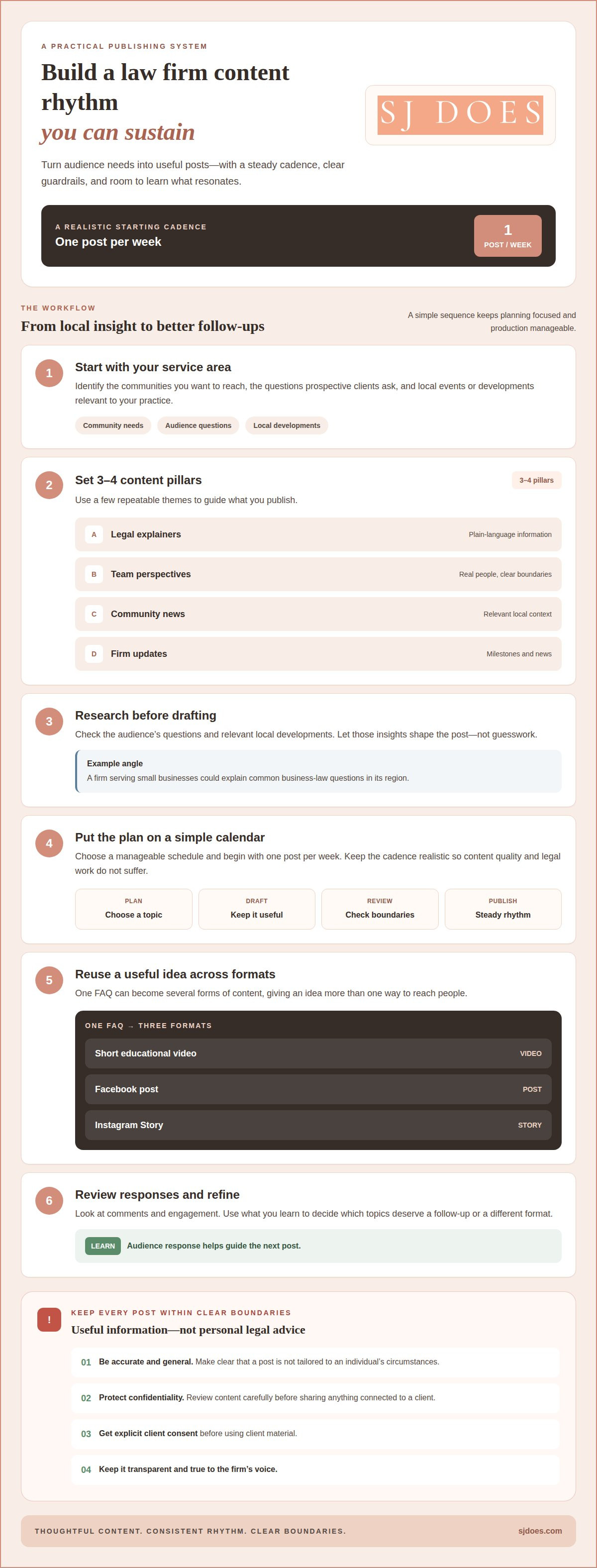
For a local strategy, start with the people and needs in your service area. Identify the communities you want to reach, the questions prospective clients ask, and the local events or developments relevant to your practice. Use those insights to shape your posts. A firm serving small businesses, for instance, could share general educational content about common business-law questions in its region.
Build three or four content pillars, such as legal explainers, team perspectives, community news, and firm updates. Research audience questions and relevant local developments before drafting. Then create a simple calendar and start with one post per week, a realistic cadence for a law firm. Review comments and engagement to see which topics merit a follow-up or a different format.
Vary formats without making production a burden. Turn one FAQ into a short video, a Facebook post, and an Instagram Story. Live streams and Q&A sessions let lawyers explain broad topics and respond to general questions. Use photography, illustrations, or video for visual variety. Podcast soundbites or music can add audio interest to videos.
Authenticity comes from real people and clear boundaries, not polished slogans. Feature a lawyer explaining why a practice area matters, or mark a team milestone with a photograph. Invite followers to share experiences or join an interactive campaign, but get explicit client consent before using client material. Set a review step to protect confidentiality, keep posts transparent, and reflect the firm’s voice.
2. Why embrace social media marketing for law firms?
Social media marketing works best when it supports a clear business goal. Choose one priority first: raise awareness of a practice area, strengthen referral relationships, or share thought leadership with prospective clients. Then define your audience by its needs and context. A family law firm, for example, might focus on local adults seeking general information about life changes, while a commercial firm might target business owners and professional contacts.
Build a practical client persona from real conversations, not guesswork. Note the questions prospective clients ask, the industries or communities they belong to, and the channels they already use. Match that profile to the platform: LinkedIn suits professional networks, while Facebook can help firms showcase community involvement and connect with local audiences. In 2024, 76% of law firms used LinkedIn, making it the most popular platform among surveyed firms.
Should law firms manage social media in-house or hire an agency? In-house teams bring direct knowledge of the practice, while outside specialists can support planning and execution. Choose the approach that fits your capacity, approval process, and need for consistent engagement.
Keep the operating rhythm manageable. Assign someone to review comments and messages, route legal questions appropriately, and share useful insights without giving personalized advice in public. Ethical communication matters at every touchpoint. Track reach, engagement, conversions, and return on investment. Compare follower counts, impressions, website traffic, and engagement rates with the goal you set.
How much does social media marketing for a law firm cost? The cost depends on scope, channels, content volume, and engagement needs, and is set after a quote request. For stronger results, align the activity with your firm’s business goals and social media strategy, then adjust based on audience response.
3. Choosing social media platforms
Choose platforms based on your audience, practice area, and the work your team can sustain. A firm focused on business clients may prioritize LinkedIn, where lawyers can share industry insights and build professional connections. A practice serving local individuals may find Facebook useful for community updates and accessible educational posts. The best fit is where potential clients already spend time and your team can maintain a thoughtful presence.
Firm adoption offers context, not a mandate. In 2024, 53% of law firms used Facebook for marketing. The ABA's 2023 TechReport reported that 40% of firms maintained a presence on Facebook. LinkedIn is the most popular social media platform for lawyers in the United States. Use those signals to frame your choice, then compare each platform with your target audience and business goals.
Match formats to the questions your practice area attracts. A firm serving entrepreneurs could publish LinkedIn posts about broad business-law developments. A local family law practice might use Facebook posts to explain common terms or share firm news. Instagram Stories and Reels suit short visual explainers, while LinkedIn articles can support deeper professional insights. TikTok had approximately 1 billion monthly active users, but audience size alone doesn’t establish a fit for every firm.
Platforms and features evolve, so review your choices as part of regular planning. Consider whether Stories, short videos, live streams, or Q&A tools help you communicate clearly and responsibly. Test one format at a time, then assess audience response and the quality of interactions. Don’t open accounts everywhere by default. A focused presence on platforms your team can maintain is more useful than dormant profiles across several networks. Revisit the mix when your practice area, target audience, or business goals change.
4. Social media policies and professional conduct
A written policy turns professional standards into daily decisions. Set clear rules for sharing client information, discussing cases, replying to comments, and approving posts. For example, an attorney should present a legal update as general information, not advice tailored to someone’s circumstances. Avoid posts about identifiable cases, especially active matters, and protect client confidentiality in every format.
Make the policy practical across platforms. A LinkedIn article, Instagram Story, or short video still needs accurate, transparent information and careful handling of client details. Before sharing a client’s story or image, get explicit consent and follow the firm’s data-handling procedures. Avoid claims that could mislead readers. Many states prohibit lawyers from describing themselves as “expert” or “specialist.”
Define who controls each account and what each person can publish. Name an account owner, contributors, and a manager responsible for approvals and access. Train employees on the policy, including how to handle direct messages asking for legal help. A thoughtful reply can direct someone to an appropriate private contact channel without discussing sensitive facts publicly.
Set an escalation process for conflicts, complaints, and posts that may expose confidential information. For instance, staff should pause before responding to a negative comment about a matter, then refer it to the designated reviewer. Review the policy when platforms or firm practices change, and ensure legal marketing communications remain accurate and comply with applicable advertising rules.
Good governance supports visibility without letting the pursuit of reach override professional judgment. If your firm wants a more structured approach to attorney-led publishing, explore structured LinkedIn content built around clear themes and review steps.
SJ DOES: Strategy
SJ DOES helps law firms connect social media activity to wider business goals through Strategy and Marketing. Turn to this work when posting feels reactive, your audience is unclear, or your team needs a direction it can follow consistently.
A practical strategy brings the pieces together: define your audience, choose relevant platforms, shape content around firm priorities, and create a workable review process. SJ DOES offers LinkedIn content and engagement strategies to help build a consistent professional presence. Its Legal Tech + AI service supports firms with technology discovery, evaluation, and adoption. The right starting point depends on the challenge you need to solve, not pressure to be active everywhere.
For a focused conversation about your firm’s direction, contact SJ DOES or visit sjdoes.com.
Make your next post part of a bigger direction
The next step isn’t to fill every content slot. Choose a business priority, decide what useful contribution your firm can make, and build a publishing process your team can sustain. That turns a law firm social media strategy from disconnected updates into a clearer expression of the firm’s work and values.
Set a review point on your calendar. Look at the conversations your posts create, whether the right people are engaging, and where the process gets stuck. Use those observations to refine your focus, responsibilities, and approval workflow. Deliberate adjustments can keep your social presence aligned with the firm’s direction instead of chasing every platform trend.
If you’re ready to make that direction clearer, contact SJ DOES for help shaping a practical next step. Build with intention, stay open to learning, and let each post earn its place.
Frequently Asked Questions
Why embrace social media marketing for law firms?
Social media gives a firm another way to stay visible between referrals and direct inquiries. It can also help lawyers build professional relationships, share timely practice-area insights, and learn which topics matter to their audience. For example, a post explaining a new development in plain language can prompt useful discussion and make the firm’s perspective easier to understand.
What should a law firm social media strategy include?
A strong law firm social media strategy connects business priorities with audience needs and a realistic publishing process. Give each platform a clear purpose, define content themes and review responsibilities, and decide how to assess meaningful responses. If the goal is to strengthen referral relationships, for example, prioritize useful professional insights and conversations over posts designed only to increase likes.
Which social media platforms are best for law firms?
The best platforms depend on whom a firm wants to reach and what content it can sustain. LinkedIn suits professional connections and industry commentary; Facebook can support community-facing updates. A firm considering Instagram or TikTok should decide whether visual explainers or short videos suit its audience and practice. A focused presence is more workable than inactive accounts everywhere.
How can law firms identify and reach their target audience on social media?
Start with the firm’s existing conversations: note who asks for help, what they ask, and which industries or communities they represent. Turn those observations into a simple audience profile, then choose matching topics and platforms. For example, a firm serving local employers might share general workplace-law insights on professional networks and assess whether the conversations involve relevant audiences.
How often should a law firm post on social media?
One post per week is a realistic starting cadence for a law firm. Use it to test whether your team can maintain quality, approvals, and timely responses without crowding out legal work. A firm with a reliable workflow can adjust its schedule to platform needs and audience engagement. Consistency matters more than publishing frequently and then going quiet.
What are the ABA rules for law firm social media marketing and attorney advertising?
Keep legal marketing accurate and transparent, protect client confidentiality, avoid conflicts of interest, and follow applicable advertising rules. Present legal updates as general information rather than advice for a specific person, and avoid discussing identifiable cases, especially active matters. For example, don’t answer a commenter’s detailed legal question with a public, case-specific opinion. Check the professional conduct rules that apply in the lawyer’s jurisdiction.


