

LinkedIn is a working relationship channel for law firms, not just a place to post firm news. As of January 2025, it had more than 1.1 billion members worldwide, giving attorneys room to share useful expertise with clients, peers, referral sources and decision-makers. Strong LinkedIn content for law firms makes that expertise visible and gives people a reason to start a conversation.
Consistency matters more than a burst of activity. The challenge is building a rhythm that fits legal work, sounds like the people behind it and supports real business development. This guide shows how to shape useful posts, engage peers without turning every interaction into a pitch, and measure signals that matter beyond likes. You’ll also get a progressive 90-day plan: establish a clear foundation, build momentum with varied content, then review what is creating meaningful conversations and referrals.
Key Takeaways
- Turn recurring client questions and timely legal or industry developments into clear, useful posts that reflect an attorney’s real expertise.
- Use thoughtful comments and the Featured section to strengthen professional relationships and make important insights easier to find.
- Look beyond likes: track meaningful conversations, referral discussions, and follow-up that connects activity to business development.
- Build your 90-day plan in stages, establishing a steady foundation before testing new formats and refining what resonates.
1. Why Does LinkedIn Matter for Law Firm Marketing?
LinkedIn gives law firms a professional setting to show how attorneys think, explain complex issues, and build relationships. As of January 2025, it had more than 1.1 billion members worldwide and more than 234 million users in the United States. An ABA survey found 76% of law firms use LinkedIn. A useful profile helps decision-makers understand a firm’s practice before a conversation begins.
What types of LinkedIn content work best for law firms? Effective LinkedIn content answers recurring client questions, explains industry changes, and shares practical legal insights. Attorney perspectives add judgment: explain what a development could mean for a business, then identify questions readers may want to consider. Checklists, event takeaways, and clear explainers can demonstrate expertise without turning every post into a pitch.
What are successful LinkedIn post examples for attorneys and law firms? An attorney might explain questions a business could consider when reviewing a contract. A firm could share an anonymized account of a creative solution or a relatable story about its approach to an issue. Handle testimonials, case results, and settlement amounts carefully: protect client confidentiality and avoid misleading claims about expertise or specialization.
What LinkedIn advertising options and costs are available to law firms? Firms can publish organic posts through attorney profiles and firm pages, or use paid LinkedIn advertising to reach professional audiences. Define the audience and campaign goal before deciding whether paid promotion fits.
Make each post useful to a specific audience, such as business owners, in-house counsel, or referral peers. For local relevance, explain an update from a local court or agency and its practical implications for businesses. Keep legal tips general, accurate, and grounded in the attorney’s expertise. Before publishing, review claims, client details, testimonials, and case examples for confidentiality and clarity.
2. Engaging with peers and using the Featured section
LinkedIn engagement starts before a lawyer publishes. Identify six to ten relevant peers, referral contacts, and industry voices to follow. Set aside 15 minutes per day to read their posts and respond with useful context. A thoughtful comment of at least 15 words can add a perspective, ask a focused question, or connect an idea to a business challenge. Skip generic praise. The goal is a real exchange, not a visible activity streak.
Make the Featured section a concise professional introduction. Pin a practical explainer, article, or event takeaway that reflects the attorney’s practice. Choose items a new connection can understand without extra context. Revisit the selection when priorities change, replacing outdated material with a current insight. A clear Featured section helps audiences find work that reflects the lawyer’s expertise.
Connections and groups are relationship spaces, not prospect lists. In a relevant LinkedIn group, answer a question with a useful point, then continue the discussion where appropriate. When a connection shares a firm update, respond to the substance rather than sending an automatic pitch. If a conversation merits follow-up, use a direct message to continue it naturally. Replying to comments within 24 to 48 hours keeps the exchange active and shows attention.
Engagement can help content travel, but reach alone isn’t the objective. Track meaningful comments, saves, profile views, and conversations that lead to calls or referral discussions. Compare which topics attract the right audience, then use those signals to guide future posts. A smaller response from relevant peers may be more valuable than broad attention without action.
Build a repeatable routine: publish, respond, and follow up. Lawyers can strengthen that rhythm with a focused LinkedIn engagement strategy that turns useful content into ongoing professional relationships.
3. Measuring visibility, referrals, and business results
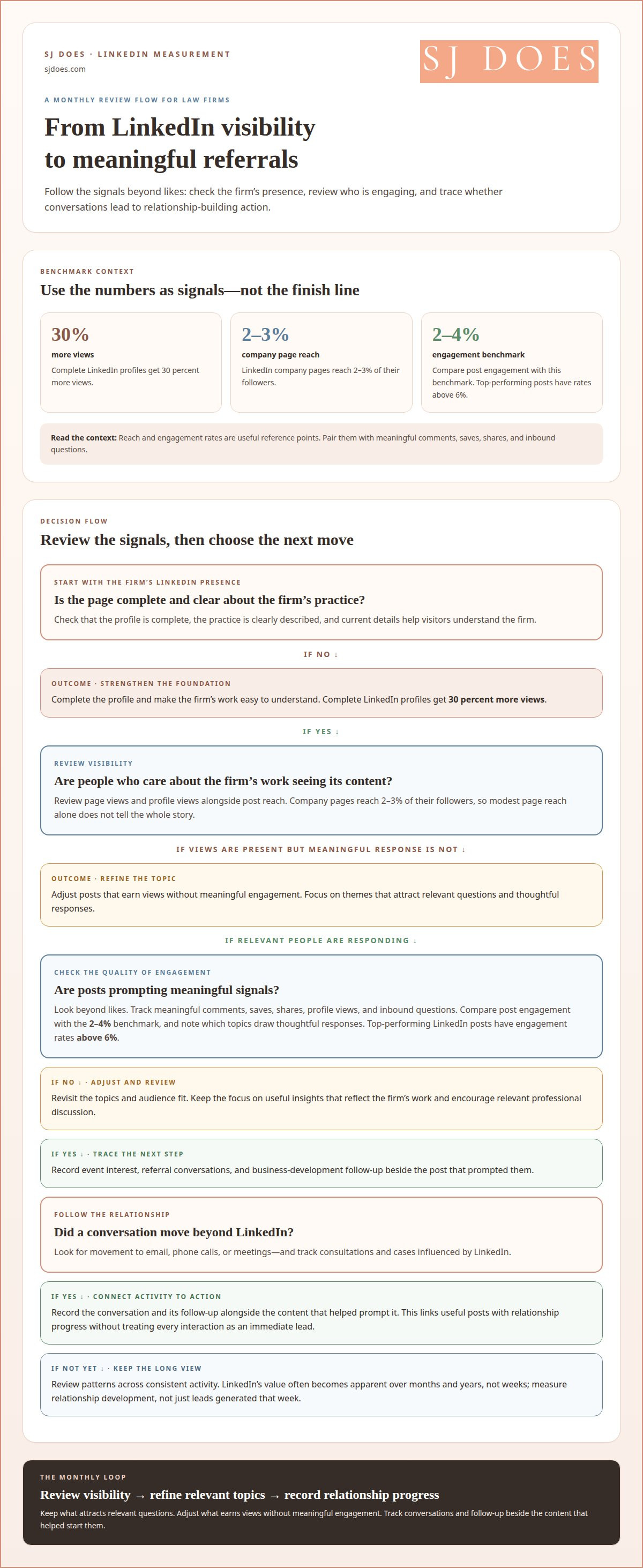
Start with the law firm’s LinkedIn page. Complete its profile, describe its practice clearly, and add current details that help visitors understand the firm. Complete LinkedIn profiles get 30 percent more views. Track page views and profile views alongside meaningful comments, saves, shares, and inbound questions. These signals show whether promotion is reaching people who care about the firm’s work, not just adding impressions.
Use a simple monthly review to connect visibility with action. LinkedIn company pages reach 2-3% of their followers, so modest page reach alone doesn’t tell the whole story. Compare post engagement with the 2-4% benchmark, then note topics that draw thoughtful responses. Top-performing LinkedIn posts have engagement rates above 6%. Treat these rates as context, not the finish line. Record event interest, referral conversations, and business development follow-up beside the post that prompted them.
How can attorneys use LinkedIn to generate leads and referrals? Share insights on business trends, explain their practical implications, and invite relevant professional discussion. Track conversations that move to email, phone calls, or meetings, as well as consultations and cases influenced by LinkedIn. This trail can connect a useful post with relationship progress without treating every interaction as an immediate lead.
Think long term. LinkedIn’s value for law firms often becomes apparent over months and years, not weeks. Review patterns across consistent activity: which themes lead to useful comments, which connections become referral conversations, and which discussions prompt follow-up? A post about a changing industry trend may bring few immediate inquiries yet support later introductions. Measure relationship development, not just leads generated that week.
Use what you learn to refine the next month’s promotion. Keep topics that attract relevant questions, adjust posts that earn views without meaningful engagement, and share insights that reflect the firm’s expertise. Tracking visibility, conversations, and follow-up gives the firm a practical basis for business development decisions.
4. A progressive 90-day LinkedIn content plan
Build the plan in stages so posting stays consistent and learning informs the next move. Start with a four-week rolling calendar and choose a pace attorneys can sustain. A practical target is two to three posts each week. Assign an owner, reviewer, and publishing date to every post. This simple structure keeps content moving without relying on last-minute inspiration.
In the first 30 days, set the foundation. Review the firm page and attorney profiles, then map recurring audience questions to content themes. Plan four FAQ posts and one case study, alongside a clear profile update. Use the calendar to balance practical explanations, firm news, and professional perspective. Keep a record of questions and comments; these can shape the next month’s topics.
During days 31 to 60, add variety without losing the rhythm. Publish two or three short video posts, and begin a biweekly article. Use each format to explore one focused idea, such as a business trend and its practical implications. After publishing, note which topics attract thoughtful responses and which messages prompt follow-up. Let those signals guide the next calendar, rather than adding formats for novelty alone.
In days 61 to 90, turn the strongest themes into a relationship-building moment. Run a webinar, share useful clips from it, and track which posts generate questions or lead conversations. Review the full period: consistency, audience response, referral discussions, and business development follow-up. Keep what supports genuine interest; revise what creates activity without useful conversation.
At day 90, carry the best-performing themes into the next four-week cycle. A focused LinkedIn content plan can help your firm turn steady publishing into a repeatable system.
SJ DOES: Strategy
SJ DOES helps law firms connect LinkedIn activity with a clearer business direction. Turn to its Strategy support when posting feels disconnected from the firm’s priorities or visibility isn’t leading to meaningful conversations. The work can bring focus to your audience, themes, and next steps.
For firms that need a stronger content rhythm, SJ DOES provides Marketing and LinkedIn Content. This means shaping a practical approach around attorney perspectives and relevant business issues, then bringing greater consistency to the firm’s message. Legal Tech + AI is another part of its offering when it fits the firm’s needs.
Ready to bring more focus to your LinkedIn approach? Visit sjdoes.com to connect with SJ DOES.
Make LinkedIn a deliberate part of growth
A firm’s LinkedIn presence works best when it reflects a clear point of view and gives people a reason to stay connected. The next move isn’t simply to publish more. Decide what you want the right people to understand about your practice, then make that perspective recognizable across your content and conversations.
A focused approach to LinkedIn content for law firms can turn individual posts into a more coherent professional presence. SJ DOES offers Strategy, Marketing, and LinkedIn Content to help firms connect their direction with how they show up on LinkedIn. It’s a natural fit when your ideas are strong but your content feels scattered, or when you’re ready to make your presence more intentional.
Choose a starting point, keep the work grounded in your firm’s expertise, and build from there. Contact SJ DOES to discuss your LinkedIn strategy. A clearer approach can help your firm show up with purpose and confidence.
Frequently Asked Questions
Why Does LinkedIn Matter for Law Firm Marketing?
LinkedIn gives prospective clients and professional contacts a place to assess a firm’s perspective before speaking with its lawyers. A complete profile, consistent language, and clear descriptions of practice areas help visitors connect the firm’s expertise with their needs. Referral partners can also share an attorney’s profile when making an introduction, extending visibility beyond the firm’s own page.
Are videos necessary?
No. Video is one format, not a requirement for a credible LinkedIn presence. Lawyers who explain ideas more clearly in writing can use text posts, documents, or articles instead. If recording feels natural, try a focused explanation of a business issue and add captions for viewers watching without sound. Choose the format that suits the attorney and the subject, then make the insight easy to follow.
Is LinkedIn Worth It for Lawyers?
LinkedIn is worth prioritizing when a lawyer’s clients, referral contacts, or professional community are active there and the lawyer can contribute useful insight. It’s less valuable as an untouched profile or a stream of generic firm announcements. Decide the role LinkedIn should play in practice development, then assess whether conversations and introductions from the platform support that goal.
Should lawyers write the posts or can staff do it?
Staff can help draft and coordinate posts, while the attorney provides the expertise and approves the substance. For example, a marketer can turn notes from a client presentation into a clear draft, then ask the attorney to check the nuance and wording. This division keeps publishing manageable while protecting the lawyer’s perspective, accuracy, and natural voice.
How often should a law firm post on LinkedIn?
Set a regular weekly schedule the firm can maintain through busy periods, rather than publishing in bursts. Choose a manageable rhythm, assign responsibility for drafting and review, and protect time to respond to comments. If urgent client work repeatedly disrupts publishing, reduce the planned pace and simplify formats. Consistency comes from a workable process, not a calendar that constantly slips.
How can law firms create a LinkedIn content strategy and calendar?
Start by naming the business goal, the audience, and the questions the firm can answer credibly. Build a calendar that gives each post a topic, responsible attorney, draft owner, review date, format, and planned publishing date. Leave room for timely developments and review the calendar regularly. This makes it easier to coordinate contributors, spot gaps, and keep content connected to the firm’s priorities.


