

A focused network beats a crowded feed. LinkedIn engagement for lawyers works best when it turns useful expertise into genuine professional conversations. Start by identifying 6–10 relevant people, then build visibility through a clear profile, helpful legal content and thoughtful comments.
That can lead to more than likes. Lawyer Noah built a significant following by sharing case-law insights, and his posts led to business opportunities and media exposure. The principle is practical: share what you know, take an interest in others’ work, and give relationships room to grow.
Consistent engagement doesn’t mean posting for its own sake or sending cold messages to everyone. This article explains how to make your value clear on your profile, repurpose existing legal content, and comment in ways that open genuine conversations. The aim is a stronger professional network, built with focus rather than noise.
Key Takeaways
- Focus your network on relevant colleagues, peers, and potential partners, then build connections through genuine interest rather than generic outreach.
- Make your profile quickly show whom you help, what you do, and what makes your approach distinct.
- Give existing legal content a second life by reshaping useful insights for LinkedIn, not simply reposting material without context.
- Use comments to add a question, example, or thoughtful perspective that gives others a reason to continue the conversation.
1. How Can Lawyers Use LinkedIn Effectively To Build Professional Relationships?
LinkedIn can support networking, referrals, and business development when lawyers engage with purpose. Begin by identifying 6–10 relevant people to follow or connect with, such as colleagues, industry peers, prospective clients, or strategic partners. Review their work before reaching out, then personalize each connection request with how you met or what caught your attention. Thirty seconds spent adding context makes the invitation feel human, not automated.
Make your profile useful after someone accepts. List relevant professional experience and skills, then use Featured content to showcase a practical article, presentation, or client alert. A clear headline and focused profile help visitors understand your work; a large connection count alone does not. Even 500+ connections can be a vanity metric if people don’t know what you do. For credibility, share useful answers to common industry questions and comment thoughtfully on peers’ posts.
Solo attorneys can create a personal rhythm by engaging directly with relevant people and sharing insights from their practice. Larger firms can coordinate individual profiles around shared themes while keeping each lawyer’s voice and relationships authentic. In either setting, LinkedIn engagement for lawyers should support real conversations, not become a volume contest.
For ABA rules and LinkedIn posts, treat public claims as lawyer marketing: keep them accurate and avoid misleading impressions. Protect confidentiality by removing identifying client details, and take care when discussing testimonials, case results, settlement amounts, or claims of expertise.
LinkedIn Ads can target potential clients by industry, job title, or other demographics. Costs depend on campaign choices and targeting, so set a clear objective before allocating spend.
No single engagement benchmark proves success for every lawyer or firm. Track visibility, substantive replies, new professional connections, referrals, and business conversations instead of relying on likes alone. To grow your network, join relevant LinkedIn Groups, listen before contributing, and use job-change or promotion notifications as natural reasons to reconnect.
2. Profile photos, banners, headlines, summaries, and experience
A visitor should understand your professional focus within 10 seconds. Use a professional, approachable headshot and a banner that reflects your practice area or firm identity. Then make your headline more useful than “Attorney”: name your practice, the people or organizations you help, and the work you handle. For example, a commercial litigator might identify the business disputes they resolve rather than rely on a job title alone.
Write your About section in the first person, clearly explaining whom you serve, your approach, and how you work with clients. Keep the language direct. In Experience, describe your responsibilities and relevant matters in plain terms, adding measurable achievements only when they’re accurate and appropriate to share. Choose skills that reflect your actual expertise. Use Featured to make useful resources easy to find, such as a published article, presentation, or firm resource.
Improve search visibility with specific language. Use the practice-area terms potential clients and professional peers would recognize in your headline, About section, and Experience entries. Avoid stuffing in unrelated keywords or using broad phrases that don’t describe your work. Review your privacy settings to make sure your profile displays only the professional details you intend to share. Check profile views and post engagement, then use the patterns you see to refine your content and profile wording.
Small profile habits can undermine credibility: an outdated role, an empty summary, inconsistent practice descriptions, or social media posting that promises more than the profile supports. Set a 20-minute monthly review to refresh current responsibilities, links, and relevant skills. If your team needs a more consistent approach to LinkedIn content planning, connect profile language with the topics you share, so visitors see one coherent professional story.
3. Repurposing existing legal content
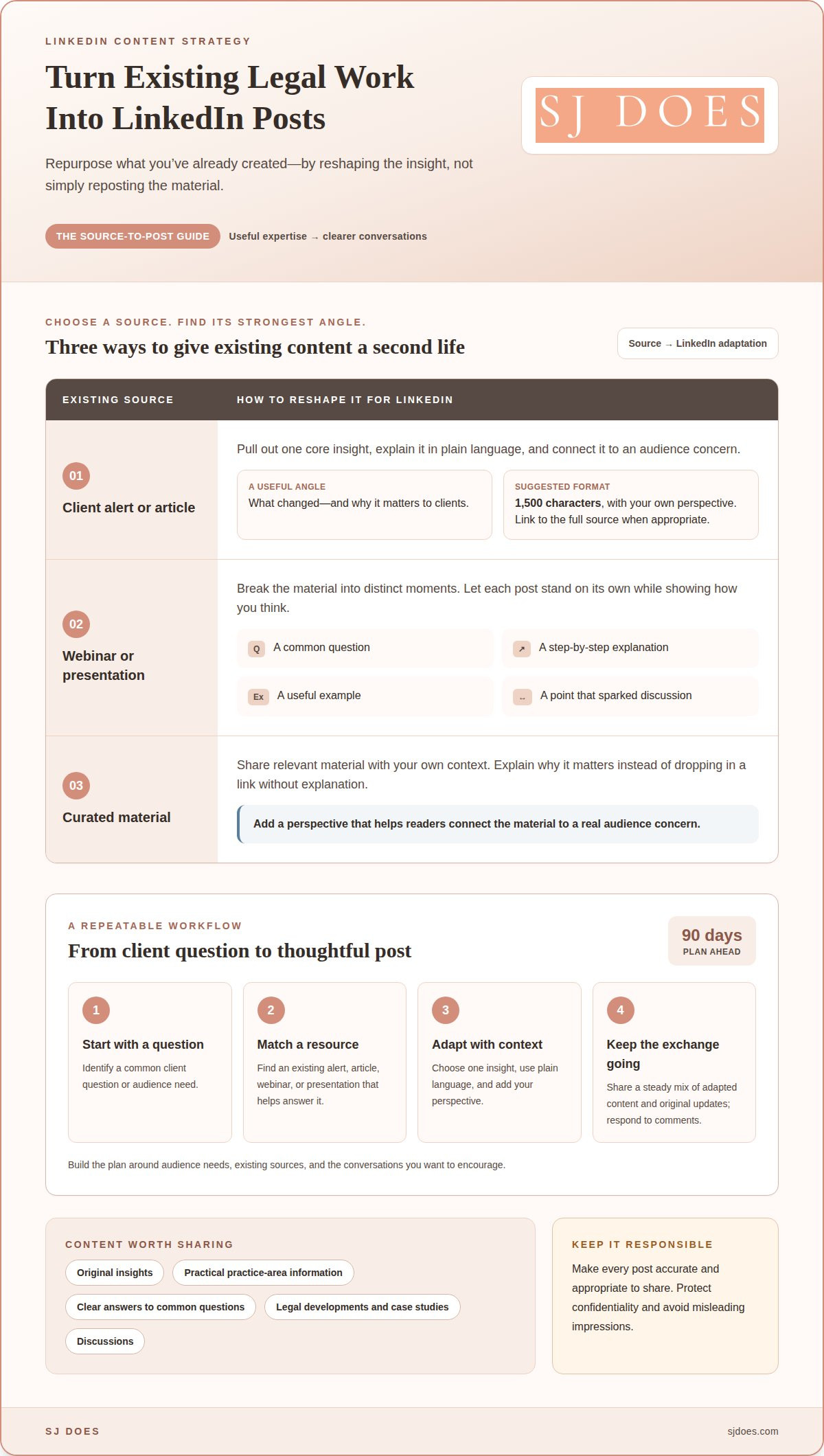
Your best LinkedIn ideas may already be in a client alert, blog post, webinar, or presentation. Start with common client questions, then match each one to a useful resource you’ve already created. An attorney can turn a detailed article into several focused posts, each explaining a practical point. That’s more useful than trying to invent a fresh idea every time you post.
Repurposing isn’t copying and pasting. Pull out the core insight, translate it into plain language, and connect it to a relevant audience concern. For example, adapt a client alert into a short post that explains what changed and why it matters to clients. A suggested LinkedIn format keeps that post to 1,500 characters. Add your own perspective, then direct readers to the full source when appropriate.
A webinar can also provide a steady source of LinkedIn content. Break it into distinct moments: a common question, a step-by-step explanation, a useful example, or a point that sparked discussion. Each post should stand on its own while showcasing the firm’s expertise. When sharing curated material, explain why it matters instead of dropping in a link without context.
What content works best for attorneys and law firms? Share original insights, practical information related to your practice area, and clear answers to common questions. Legal developments, case studies, and discussions can also help your audience understand how you think, as long as each post is accurate and appropriate to share.
Plan before posting. Build a 90-day thought leadership plan around audience needs, existing sources, and the conversations you want to encourage. Schedule a steady mix of adapted content and original updates, then respond to comments so each post can start a real conversation. Review which topics prompt meaningful replies, not just reactions, and use those signals to shape the next planning cycle. A focused LinkedIn profile and consistent content should tell the same story: what you know, who it helps, and how you approach the work.
4. Commenting thoughtfully on other people’s posts
Spend 15 minutes per day reviewing relevant posts and choosing where to contribute. A useful comment adds something the original post didn’t: a clarifying question, a brief example, or a respectful alternative view. If a law firm partner shares a post about a legal development, explain one practical implication for the businesses affected. Specificity gives people a reason to remember your presence.
Skip “Great post” and other empty praise. Generic AI comments can sound polished but still fit almost any post, making them easy to ignore. Before commenting, identify the author’s main point and add a thought grounded in your experience. Keep your tone professional, especially when you disagree. A concise, useful contribution can start a conversation without turning the thread into a sales pitch.
How should lawyers respond to comments and messages on LinkedIn? Address the point raised, thank the person where it feels natural, and ask a follow-up question if it can move the conversation forward. Build a relationship through relevant exchanges before sending a direct message, and keep client-specific details out of public replies.
LinkedIn Groups offer another place to listen and contribute. Set aside 30 minutes weekly to review discussions connected to your practice area, answer questions you can address clearly, and join conversations without promoting your services. If someone responds to your comment, continue the exchange with substance rather than immediately asking for a referral. A promotion or work anniversary can also prompt a brief, personal message to reconnect with a professional contact.
Thoughtful commenting works best as part of a steady engagement habit, not a burst of activity followed by silence. Choose relevant conversations, add a clear perspective, and respond when others engage. If you want a more intentional approach to planning and delivering LinkedIn content and engagement, build a routine around the discussions your professional network already values.
SJ DOES: Strategy
SJ DOES helps lawyers turn LinkedIn activity into a clearer, connected business-development approach. If your profile, posts, and comments feel disconnected, its Strategy and Marketing services can help align your direction with the professional relationships you want to build.
If your firm knows what it wants to say but needs a consistent way to say it, SJ DOES’s LinkedIn content and engagement strategies can support a more focused presence. Shape useful ideas around your audience and practice, then connect content with thoughtful engagement. Strategy can also help clarify priorities before you invest more time in posting.
Reach out to SJ DOES to discuss a practical next step for your LinkedIn approach.
Make your next LinkedIn move intentional
Your next step isn’t necessarily to post more. Decide what you want your professional presence to make possible, then choose an action that supports it. You might sharpen your perspective on a sector issue, reconnect with a former colleague, or create a consistent rhythm for sharing useful ideas.
That intention gives LinkedIn engagement for lawyers a stronger purpose: building professional relationships over time, not activity for its own sake. Keep your approach grounded in the people you want to reach and the conversations you’re ready to have. Progress starts with clarity and grows through consistent follow-through.
SJ DOES can help connect the dots through Strategy, Marketing, and LinkedIn Content. If you’re ready to make your LinkedIn presence more focused, contact SJ DOES to discuss LinkedIn. Start with the next useful conversation, and build from there.
Frequently Asked Questions
Can You Provide An Example Of Successful LinkedIn Use For Business Development?
A lawyer reportedly gained 2 new clients after 30 days of strategic LinkedIn networking. The useful lesson isn’t to expect the same outcome on a set timeline. It’s to connect purposeful activity with business goals: focus on people relevant to your practice, contribute to conversations they care about, and notice when professional exchanges develop into genuine opportunities.
How Can Lawyers Build Credibility On LinkedIn Without Excessive Self-promotion?
Make your judgment visible by explaining how you think through a professional issue, rather than simply announcing your expertise. For example, outline practical questions a business might consider after a legal development, without giving advice on an individual matter. You can also discuss lessons from public sources without implying involvement in a client’s confidential circumstances or overstating what the information proves.
How Can Lawyers Use LinkedIn Effectively To Build Professional Relationships?
Treat LinkedIn as an ongoing professional conversation, not a contact-collection exercise. If a former colleague changes roles, congratulate them and ask what they’re focusing on now. With a newer contact, keep the exchange connected to shared professional interests instead of jumping straight to a sales request. Thoughtful follow-through gives a connection context and a reason to stay in touch.
How Much Time Should Lawyers Spend On LinkedIn Weekly To See Results?
Setting aside time each month can help lawyers plan effective engagement. Review your priorities, plan your activity, and check whether conversations are developing into useful professional relationships. If your schedule is tight, choose a repeatable routine that fits around client work. Consistency and relevance matter more than opening LinkedIn without a clear purpose.
How Should Lawyers Approach Direct Outreach On LinkedIn To Maintain Authenticity?
Send a message when you have a clear reason to contact someone, such as following up on a discussion or sharing a resource relevant to their work. Keep it personal, brief, and easy to answer. Avoid opening with a pitch or implying a relationship that doesn’t exist. If the person doesn’t respond, give them space rather than repeatedly nudging them.
What Distinguishes Successful LinkedIn Users From Those Who Struggle To Gain Traction?
Effective LinkedIn users connect their activity to a clear purpose and pay attention to what happens after a post is seen. They look beyond reactions: does a discussion lead to an ongoing exchange, a stronger professional relationship, or a relevant business conversation? Focusing only on posting volume or connection totals can mean missing those signals. Review the outcomes and adjust your approach.


