

LinkedIn can support law firm marketing by making your expertise visible and giving professional relationships room to grow. A lawyer LinkedIn content strategy should bring together a clear profile, useful posts and genuine engagement, so potential clients and referral partners understand what you do and remember you when it matters.
It’s easy to treat posting as the whole job. It isn’t. Your profile sets the context, your content shows how you think, and your conversations help build trust over time. The aim isn’t to publish constantly or sound like everyone else. It’s to stay relevant to the people you want to reach.
This article explains how LinkedIn can support law firm marketing and how to use it with purpose. You’ll learn how to present your experience, build referral connections and plan useful posts around a manageable rhythm. The result is a practical framework for showing up consistently without turning LinkedIn into another full-time job.
Key Takeaways
- Make your profile quickly communicate who you help, what you focus on, and why your perspective is useful.
- Present experience and recommendations as clear evidence of your expertise, while protecting client confidentiality.
- Build referral relationships through thoughtful comments and relevant conversations, not connection requests alone.
- Choose a few useful themes and formats, then plan a posting rhythm you can sustain.
1. Why Does LinkedIn Matter for Law Firm Marketing?
LinkedIn gives attorneys a place to explain their work before a referral conversation begins. In January 2025, it had more than 1.1 billion members worldwide and more than 234 million users in the United States. A complete profile can help people understand your practice, audience, and perspective at a glance. Complete LinkedIn profiles get 30 percent more views.
Start with positioning. Write a headline that names your practice and the people or organizations you help, rather than relying on “Attorney” alone. Use the About section to explain the problems you handle, your approach and the work you want to be known for. Then check that your experience, skills and contact details support the same message. A focused profile makes the next step clear.
Should lawyers use LinkedIn personal profiles or company pages for marketing? Use both, with distinct roles: an attorney’s personal profile can showcase individual expertise and support professional relationships, while a law firm page represents the firm. Keep the details aligned, and share relevant firm updates through both channels where appropriate.
What are the ABA rules for lawyer advertising and LinkedIn posts? Treat posts as professional communications: avoid misleading claims and protect client confidentiality. Get written consent before sharing client details, and follow the professional conduct rules that apply in your jurisdiction.
Keep the profile current. Choose a professional photo that clearly shows you, and use a custom LinkedIn profile URL that’s easy to include in an email signature or event biography. These details make your profile easier to recognize and share. Review them whenever your role or practice focus changes.
For example, an employment attorney might use a headline that identifies their practice and the employers they serve, then explain common workplace issues in plain English. A law firm page can clarify the firm’s focus and share relevant news. The strongest lawyer LinkedIn content strategy starts with this alignment: your profile tells readers who you help, and your activity gives them a reason to keep the conversation going.
2. Presenting legal experience, skills, endorsements, and recommendations
Experience earns attention when readers can see what it means in practice. In the Experience section, describe your role, the work you handle and the audiences you serve. Replace broad claims like “seasoned litigator” with a specific account of your work, such as guiding businesses through employment disputes. Add relevant skills, then ask colleagues who know your work to endorse them. Recommendations are most useful when they describe a genuine professional quality or collaboration, not just offer praise.
Keep the evidence consistent. If your profile highlights employment law, a recommendation about related work reinforces that focus. Ask people who can describe your contribution firsthand, and thank them with a specific, personal response. Endorsements and recommendations support your positioning; they don’t replace a clear explanation of your experience.
What LinkedIn content strategy works best for different legal practice areas? Start with the questions each audience asks, then match the format to the subject. An employment lawyer can explain a workplace update, while an estate planning attorney can answer a common planning question. For business litigation, a concise breakdown of a dispute’s general lessons may be more useful than a broad post about litigation.
Useful posts turn expertise into accessible guidance. Share quick legal tips, explain a recent development relevant to your practice, or answer a recurring audience question in plain language. A 60- to 90-second video can make one concept easier to follow. Use comments to clarify a point or invite a thoughtful discussion, rather than treating every post as an advertisement.
An anonymized case story can show how a legal issue unfolds and what readers should consider. Remove identifying details, and focus on the general lesson instead of presenting confidential facts. Myth-busting posts and short FAQs also make strong thought leadership: state the misconception, explain the distinction, then offer a practical next step. For a more deliberate approach to LinkedIn content planning, connect these formats to your practice and audience.
3. Building a professional network and referral connections
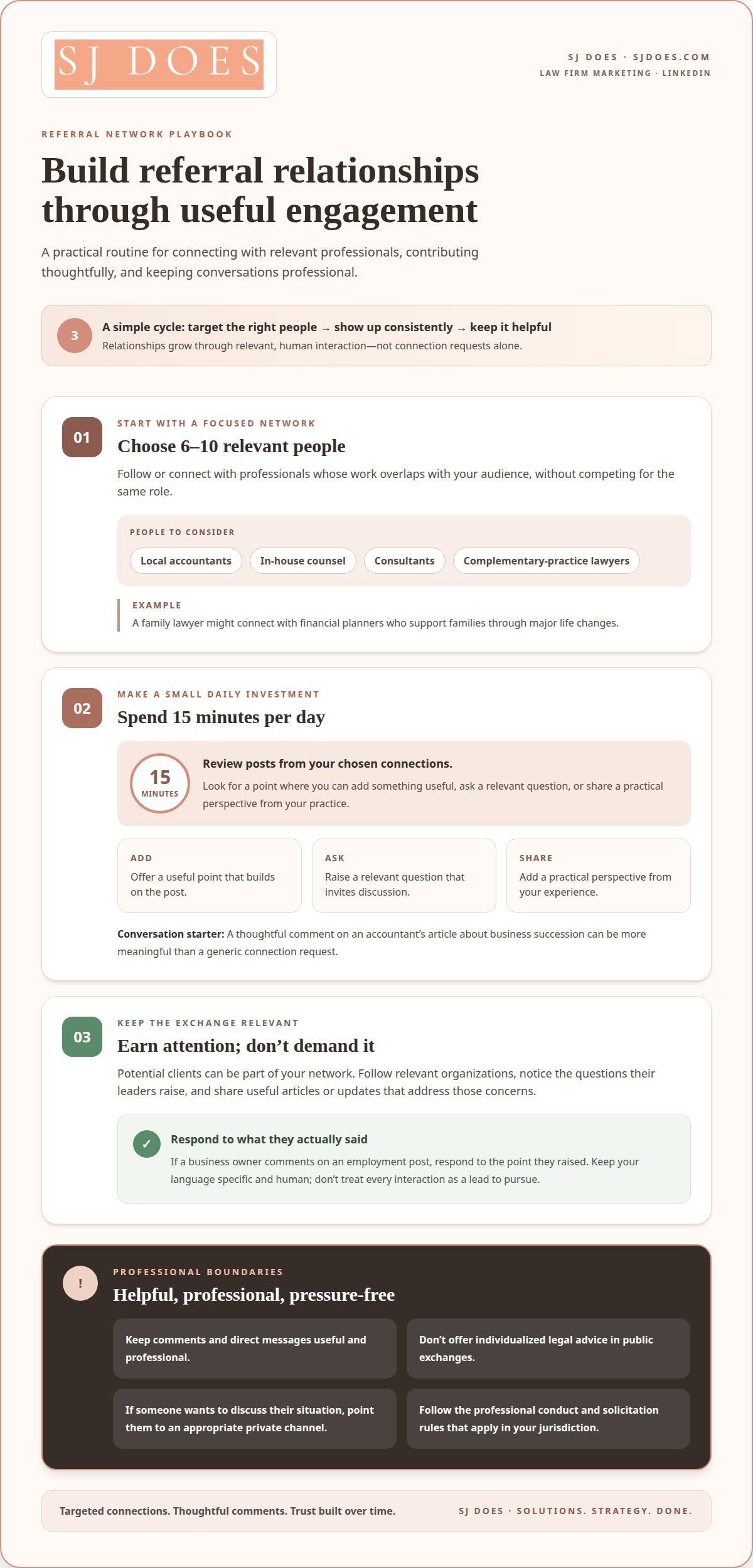
Start with a targeted network, not a large, random one. Identify 6-10 relevant people to follow or connect with, such as local accountants, in-house counsel, consultants, and lawyers in complementary practices. Choose people whose work overlaps with your audience without competing for the same role. A family lawyer, for example, might connect with financial planners who support families through major life changes.
Spend 15 minutes per day reviewing those connections’ posts and leaving considered comments. Add a useful point, ask a relevant question, or share a practical perspective from your practice. A comment on an accountant’s article about business succession can start a more meaningful exchange than a generic connection request. Keep the language specific and human.
Potential clients belong in your network too, but your approach should earn attention rather than demand it. Follow relevant organizations, notice the questions their leaders raise, and share useful articles or updates that address those concerns. If a business owner comments on an employment post, respond to the point they raised. Don’t treat every interaction as a lead to pursue.
How can lawyers turn LinkedIn engagement into consultations without violating solicitation rules? Keep comments and direct messages useful, professional and free of pressure. Don’t offer individualized legal advice in public exchanges. If someone wants to discuss their situation, invite them to use an appropriate private channel, while following the professional conduct and solicitation rules that apply in your jurisdiction.
Relationships need follow-through. After a thoughtful exchange, connect with a brief note that refers to the conversation, not a canned pitch. When a contact shares an article, offer a meaningful response or pass it along with context for your audience. These small actions keep you active and make your perspective easier to understand. Over time, they can build a network of people who know your work and can recognize when a referral may be relevant.
4. Posting consistently and planning a content calendar
An effective LinkedIn content strategy for law firms starts with three clear content pillars and a realistic schedule. In month one, choose themes tied to your practice area, such as legal updates, practical explanations, and lessons from common business challenges. Each theme gives your team a useful starting point without making every post sound the same.
Build a 90-day plan around what your firm can sustain. Start with two posts per week, then adjust as the team finds a workable rhythm. A four-week rolling calendar keeps upcoming topics visible while leaving room for timely developments. Assign each post an owner, format, and intended audience, so the plan turns into action.
Make existing material work harder. One blog post can become several LinkedIn posts, a carousel and a short video clip. For example, a tax law article might yield a brief explanation, a common-question post, a carousel of key points and a video summarizing one practical takeaway. Keep each version focused on one message.
Choose formats that fit the idea. A short video can explain a complex update in a more human way, while a carousel can break a process into readable steps. Text posts suit a direct observation or question. Rotate formats, then note which topics and formats prompt relevant comments, meaningful conversations and stronger engagement.
Review performance regularly. Compare impressions with engagement, then look beyond reach: which posts prompted useful questions, profile visits or follow-up conversations? If a post about contract changes draws thoughtful responses, use that signal to plan a related topic. Metrics can help refine your message, but they don’t replace professional judgment about what your audience needs.
Need a clearer calendar and a consistent publishing rhythm? Build a LinkedIn content plan around your firm’s priorities and capacity.
SJ DOES: Strategy
SJ DOES helps law firms connect their LinkedIn presence to wider marketing priorities. Its strategy work brings clarity to what your content should achieve, who it needs to reach and how your profile, posts and engagement can work together.
Turn to SJ DOES when you know LinkedIn matters but lack clear direction, or when posting feels disconnected from your firm’s positioning. Its LinkedIn content and marketing support can shape a consistent approach around your expertise and referral goals. The focus is practical: clarify your message, plan useful content and build a sustainable way to show up.
If you’re ready to bring more structure to your LinkedIn approach, contact SJ DOES or visit sjdoes.com.
Make your next LinkedIn move intentional
A lawyer LinkedIn content strategy works best as a living part of your professional practice, not a separate performance. Let each post reflect the expertise you want people to remember, and use the conversations that follow to learn what your audience needs. That feedback gives you a stronger basis for deciding what to say next.
Start with one adjustment you can make this week. Refine a message that feels too broad, draft an answer to a question you hear often, or set aside time to engage with people whose work connects to yours. Small, deliberate actions build a more recognizable presence over time.
If your next step is bringing more structure to your LinkedIn approach, contact SJ DOES. Turn your expertise into a clear, considered presence, and keep building from there.
Frequently Asked Questions
Why Does LinkedIn Matter for Law Firm Marketing?
LinkedIn helps a law firm stay visible in professional conversations where clients and referral partners already participate. For example, an attorney who comments thoughtfully on a business owner’s post may become familiar before that owner needs legal support. Treat the platform as a place to demonstrate judgment and build recognition, not as a substitute for strong client service or direct relationship-building.
Is LinkedIn Worth It for Lawyers?
LinkedIn can be worthwhile when your clients, colleagues or referral sources use it professionally. A commercial attorney, for example, might connect with founders and in-house teams by sharing clear observations about common business issues. If your audience rarely uses the platform, prioritize the channels and relationships that already help you reach them. The value comes from relevance and meaningful participation, not simply having a profile.
What should lawyers post on LinkedIn to attract clients?
Share material that helps a potential client understand an issue before it becomes urgent. A small-business lawyer could explain what to consider before signing a supplier agreement, then invite readers to reflect on their own process. Other useful ideas include a plain-language answer to a recurring question, commentary on a public legal development or a short checklist. Keep each post focused, and don’t imply that general information resolves an individual matter.
How often should attorneys post on LinkedIn?
Choose a cadence you can maintain alongside client work, then review it once you’ve established a routine. For example, publish on a regular weekday and reserve time to respond to comments. If court deadlines or client demands interrupt that rhythm, return with a useful update rather than rushing out a weak post. A dependable schedule is more practical than bursts of activity followed by silence.
How can lawyers optimize their LinkedIn profiles for visibility and leads?
Make the next step obvious to the right reader. Check that your profile’s contact options work, your practice description matches the matters you want to attract, and your recent activity supports that focus. A lawyer seeking more work from technology companies, for instance, can share relevant commentary and join discussions those leaders follow. Review your profile after a practice change so outdated positioning doesn’t confuse prospective contacts.
Which LinkedIn content formats get the most engagement for lawyers?
No single format fits every legal topic or audience. A short video can put a face and voice to a practical explanation, while a carousel can make a multi-step process easier to scan. A concise text post may work better for a timely observation or question. Test formats against the responses you want, such as thoughtful comments from business owners, rather than treating impressions alone as proof of value.


